
If you’ve ever wanted to make money online but did not want to sell, show your face, or grind for hours over content, then AI training tasks might be what you have been searching for. As AI grows, companies desperately need everyday people to help train, correct, and improve these systems we all use. And the best thing is, you don’t need a tech background to get started.
AI training task sites pay regular workers to perform simple yet vital tasks, such as evaluating search results, chatbot responses, image labeling, or reviewing content for accuracy. These jobs fit easily into a full-time schedule, making them one of the most flexible side hustles for a 9-5 worker who wants something low-stress yet meaningful.
But before you jump in, it’s good to understand exactly what these jobs entail, how much one can truly earn, and which websites are worth the time.
What Exactly Are AI Training Tasks?
When people think about “AI training,” they often conjure images of coding or complex computer work. But the reality is much simpler.
The AI training task is a small assignment that would help artificial intelligence learn the way humans think, behave, and communicate. For every “smart” tool you use—Google search, ChatGPT, voice assistants—there are literally thousands of human contributors guiding the machine. In practice, most of the task involves checking whether a search result matches what someone typed, rating chatbot answers as helpful or safe, labeling objects in photos or short videos, deciding whether some content is harmful, fabricated, or misleading, and correcting sentences to make AI understand grammar.
These tasks don’t require experience. They need attention, patience, and the ability to follow clear instructions. Sometimes, it can also be described as “digital quality control.”
Why AI Training Tasks Are Perfect for 9–5 Employees
AI tasks work beautifully around a demanding schedule, for the simple reason that you don’t have to be online at a specific time. You can work early in the morning, before work, or in the quiet hours after dinner, on weekends, or on short breaks throughout the day.
Most of the tasks are flexible and asynchronous, not requiring meetings, calls, or real-time collaboration.
They’re also introvert-friendly, low-pressure, and structured-just about perfect for those seeking reliable extra income without burnout.
What Skills Do You Actually Need?
You don’t need a degree, portfolio, or technical background. The platforms only expect:
- Clearly written English
- Ability to follow instructions
- Access to a computer/laptop and a stable internet connection
- Reliability
- Passing simple qualification tests
If you’ve ever followed a how-to guide or a workplace checklist, you’re already qualified.
The Hidden Pros and Cons of These AI Training Tasks
Pros:
✔️ Quiet, focused work
✔️ No customer service or selling
✔️ Higher-paying than surveys or simple microtasks
✔️ It improves problem-solving skills
✔️ Legitimate and organized
✔️ Fits into small time blocks
Cons:
❌ Qualification tests can be strict
❌ Not enough work every week
❌ Some tasks require careful reading and detail
❌ Pay varies by location
But with patience and persistence, this side hustle can become a reliable income stream that grows with experience.
The Best AI Training Task Sites To Try
Below are the platforms that most 9–5 workers use. Not random sites but established firms that supply human intelligence to major AI systems worldwide.
1. CrowdGen by Appen

Appen is a very established and reliable company when it comes to AI model training. They work with giant tech companies and provide a large number of tasks, from search evaluation to social media analysis and data annotation.
What workers like:
– Good long-term projects
– Tasks you can do anytime
– Consistent pay
– Beginner-friendly
What workers dislike:
– Work availability varies based on the location
– Some projects have strict guideline
A common and robust point of entry for consistent part-time work in AI would be with Appen.
2. Telus International AI
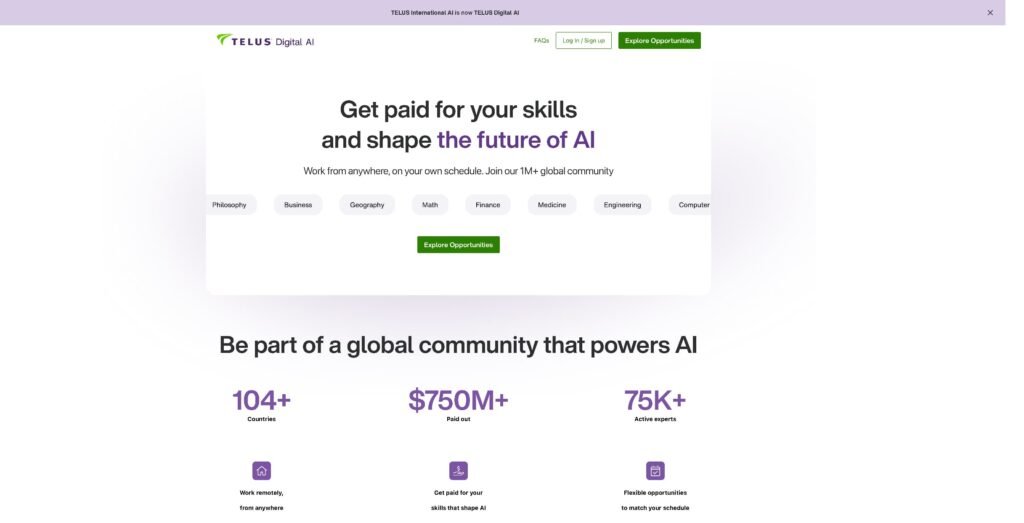
Telus has also been involved in some of the most organized and consistent projects in the sector. Specifically, 9-5 employees are in love with their Search Rating and Rater labs program.
What workers like:
– Clear instructions
– Repetitive but predictable work
– Better paying than most survey or microtask sites
– Often long-term projects (6–24 months)
What workers dislike:
– Stricter qualification exams
– Slots for projects are limited
– You can be waiting weeks for approval
Nonetheless, Telus remains one of the most ideal options for side income.
3. DataForce by TransPerfect
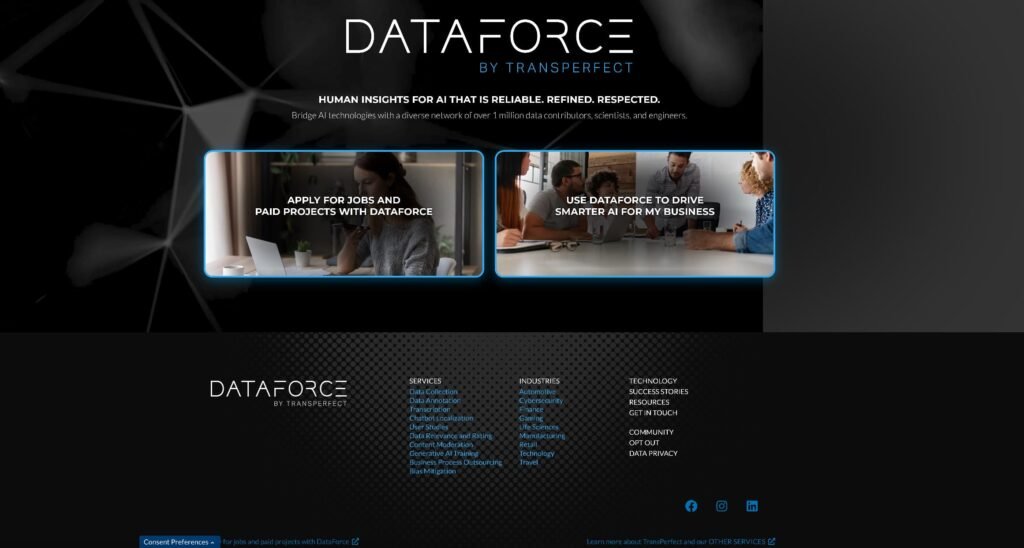
DataForce provides project-based work that generates higher income than the typical microtasks. Activities in DataForce involve audio recording, transcription, data labeling, and linguistic tasks.
What workers like:
– Some of the best pay rates available for a task-based service
– Available worldwide
– Management of the project is clear and professional
What workers dislike:
– Projects fill up quickly
– Not always beginner-friendly
– Availability of work varies
Think of DataForce as a “rewarding but competitive” alternative.
4. OneForma (Pactera EDGE)

Best for flexible, task-based earning. OneForma is great if you want to work entirely on your own schedule. They offer typing jobs, data collection, testing tasks, and linguistic projects.
What workers like:
– No fixed schedule
– Lots of one-off projects
– Beginner-friendly
– Global availability
What workers dislike:
– Poor support
– Slow onboarding process
Best for workers who want flexibility, occasional tasks, or weekend-only gigs.
5. RWS
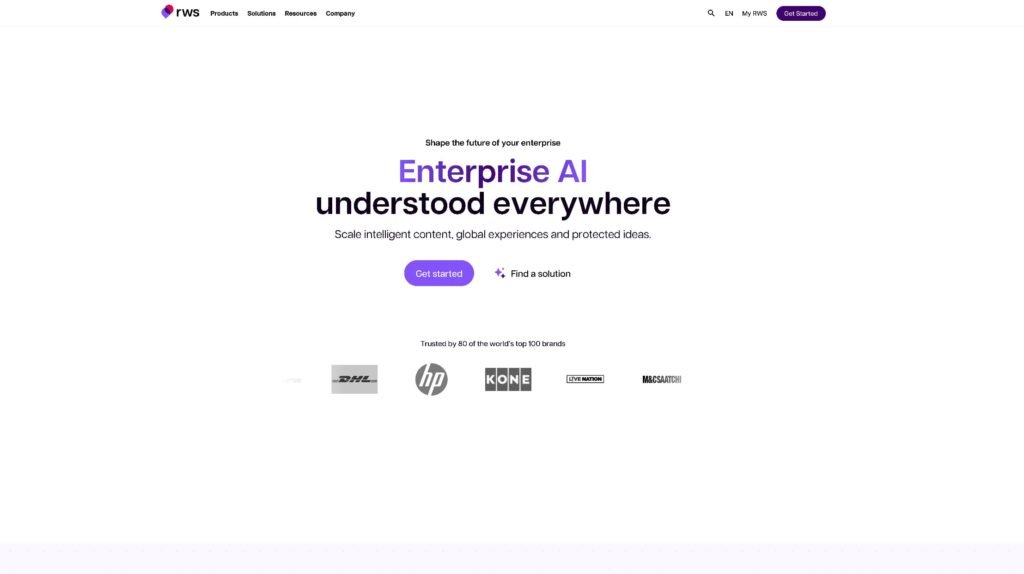
RWS is similar to Telus, but it often involves a wider range of specialized project types. These types of projects can involve tasks such as labelling, linguistic annotation, and AI projects that specialize in translation.
What workers like:
– High-quality annotation/language jobs
– Suitable for expert-level tasks
What workers dislike:
– Not ideal for total beginners
– Fewer micro-tasks
Best for professionals with language skills or prior annotation experience.
6. Outlier.ai
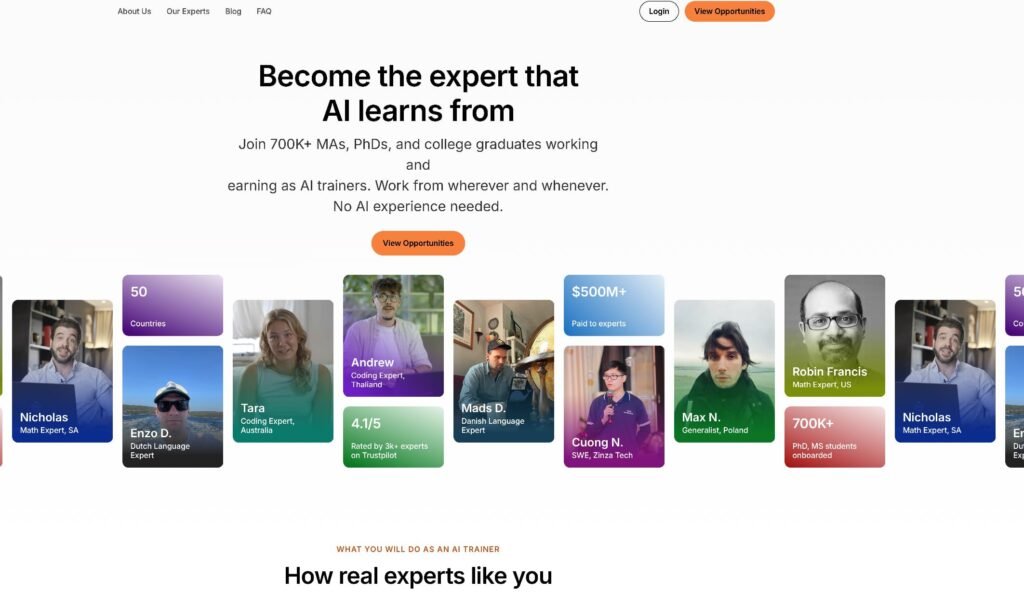
Outlier.ai is a very reputable platform for LLM training tasks. Rates can be excellent—sometimes $15–$40 per hour—but the tests are challenging.
What workers like:
– High pay rate ($15–$40/hour+)
– Interesting, intellectually stimulating tasks
– Great for writers and analytical thinkers
What workers dislike:
– Difficult qualification tests
– Work availability fluctuates
Best for writers, strong English speakers, and analytical workers.
7. Mindrift

Great for specialized AI training roles. Mindrift focuses on high-level AI training tasks like model evaluation, writing, and reasoning. The platform is quite selective, but when accepted, it can be a rewarding experience.
What workers like:
– Good hourly rates
– Flexible schedule
– Tasks reward quality over speed
What workers dislike:
– Selective acceptance
– Requires strong writing or reasoning ability
Best for 9–5 workers with strong writing or reasoning skills.
8. Amazon Mechanical Turk (MTurk)
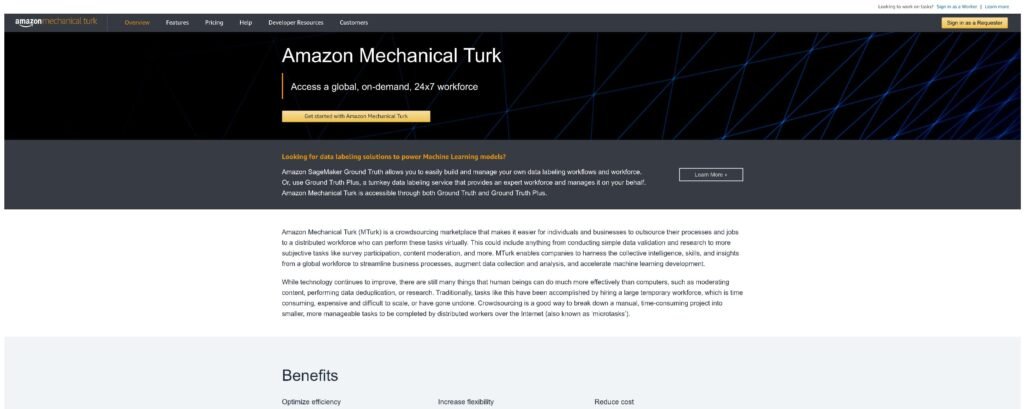
Beginner-friendly microtasking (small earnings). MTurk isn’t exclusively for AI training, but it contributes to AI datasets and remains a popular microtasking platform.
What workers like:
– High task variety
– Great for U.S. workers
– Perfect for short task sessions
What workers dislike:
– Very low pay outside the U.S.
– Lots of low-quality tasks to filter
Best for quick, small tasks while multitasking.
9. Clickworker
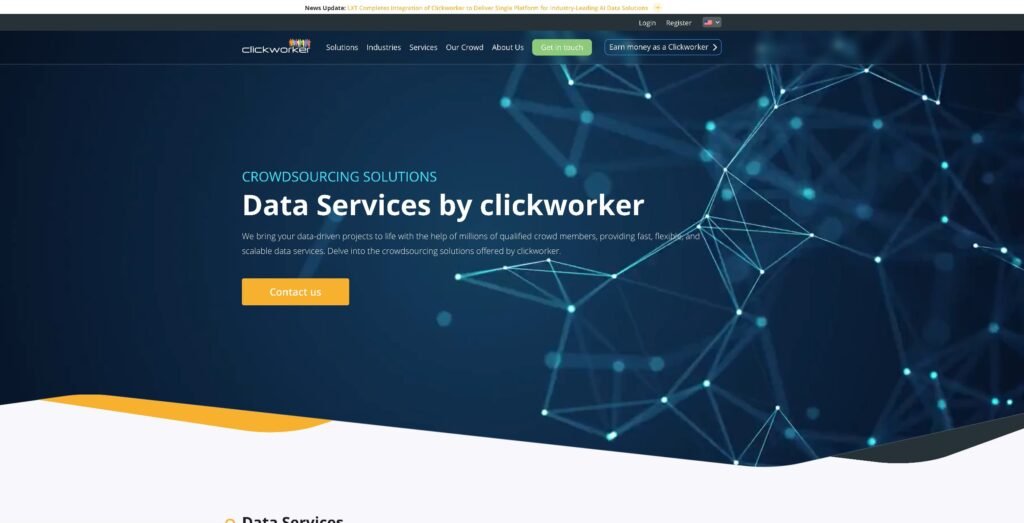
Clickworker gives you access to UHRS, which is one of the highest-paying microtask environments in the world.
UHRS tasks include rating search results, validating content, and doing simple annotation jobs. Great supplemental income source.
What workers like:
– Work is available almost anytime
– Great for evenings or weekends
– Pays weekly
– Beginner-friendly
What workers dislike:
– UHRS availability depends on your country
– Income varies widely
– Tasks can be repetitive
It remains, nonetheless, one of the most popular platforms for casual AI tasks.
How Much You Can Actually Earn (The Honest Breakdown)
Let’s talk numbers, not the hyped earning figures you see flaunted on social media.
Earnings vary by country, project type, and how much time you have, but here’s a grounded estimate of what 9-5 workers typically make
⚫ Light Commitment (2–4 hrs/week):
$40–$150 per month
⚫ Moderate commitment (5–10 hrs/wk):
$150–$450 per month. Here is where most workers fall.
⚫ High commitment (10–20 hrs/week):
$400–$1,000+ per month. Possible if you combine multiple platforms, qualify for high-paying tasks, or take on LIDAR/advanced projects.
Occasional peak earnings:
It’s possible for some workers to make $1,500–$2,000 in those months when they happen to land rare, long-term projects, but that is not the norm.
AI training is not a get-rich-quick side hustle. It is, however, one of the most stable online side hustles available.
╰┈➤ Also Read:
25 Best Side Hustle Ideas for a 9-5 Worker
How to Get Approved Faster-and Avoid Instant Rejection
Many AI task sites are picky—and rejection is common. Not because you’re not “good enough,” but because they’re screening for people who follow instructions well.
Here is how you can improve the odds of approval:
1. Read the qualification test instructions slowly. Most people rush and fail.
2. Use a laptop, not a phone. Mobile responses tend to cause formatting issues and mistakes.
3. Pay attention to examples. Qualification tests almost always include sample answers. They are clues.
4. Avoid inconsistencies. If you rate one item “high quality” and a similar item “low quality,” you get flagged.
5. Do not use any AI tool during the test. Yes, they detect it. And yes, that will get you permanently banned.
The hardest part is passing the first test; thereafter, simple reliability keeps you eligible for more tasks.
The best AI tasks for busy or tired 9–5 workers
Not all activities require the same amount of mental energy. If you find that you’re regularly leaving work exhausted, consider selecting activities that match your level of energy.
– Low Energy Tasks:
- Simple image labeling
- AI comparison ratings
- UHRS annotation jobs
- Quick content judgment tasks
– Medium Energy Tasks:
- Search evaluation
- Chatbot response rating
- Short transcription tasks
– High Energy Tasks:
- LIDAR annotation
- Complex data labeling
- Long-form content evaluation
- High-level quality assurance
Picking tasks that match your energy prevents burnout and makes you more accurate, allowing you to continue to be eligible for longer-term projects.
How to Avoid Burnout in AI Training tasks
AI training tasks are simple-looking, but the mental repetition can be draining. Burnout usually comes from:
– Doing more than one activity at a time
– Not taking breaks
– Trying to qualify for every project
– Ignoring your natural energy limits
Here is how to remain consistent without overexerting yourself:
– Work in brief sessions. Often, 20–30 minutes is more effective than long stretches
– Rotate between task types. Switching from “evaluation” to “labeling” is like a hard reset of your brain.
– Take breaks when accuracy drops. Accuracy matters more than speed. Mistakes lead to removal.
– Don’t be dependent on just one platform. There is usually work when one site goes dry.
Think of AI training tasks as part of your routine, not an activity in which you force yourself to grind through.
Is AI training a long-term side hustle?
The short answer: yes — but not in the same form forever.
The nature of AI training tasks will keep changing as the models become smarter. Some tasks will disappear, new ones will arise. Companies will refine guidelines, raise payouts, lower payouts, shift their needs, or change task formats altogether.
But human judgment—that “human intelligence layer”—will continue to be in demand. AI still needs human oversight to avoid:
– Misinformation
– Bias
– Harmful Content
– Inaccurate responses
– misunderstanding of human intent
As long as there is AI, there will be human raters.