
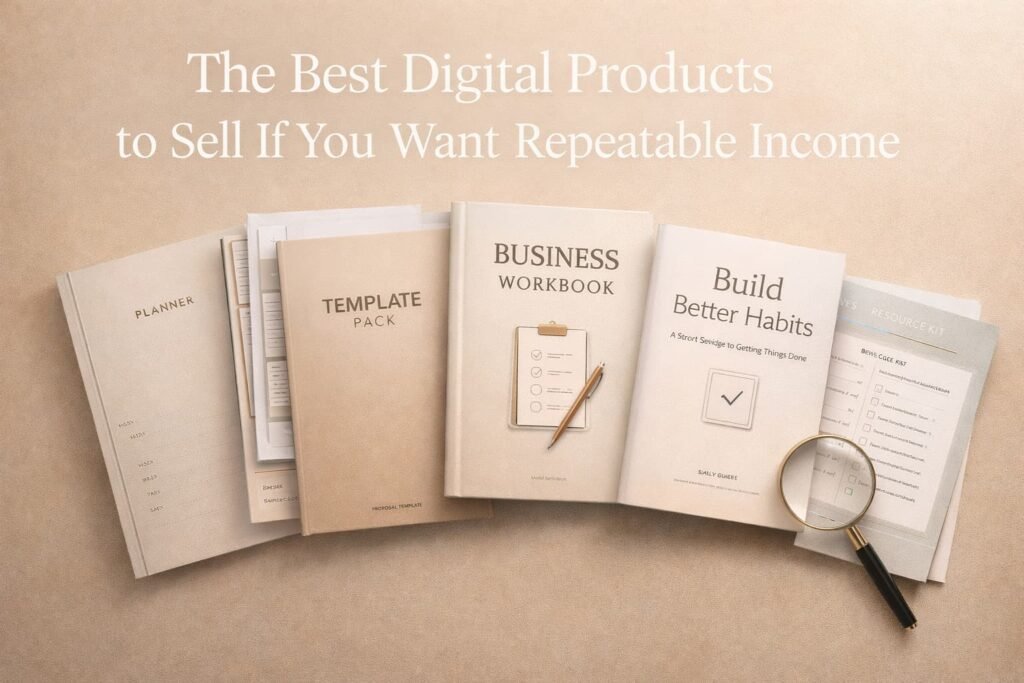

A lot of people get interested in digital products because the idea sounds clean.
You make something once. You put it online. People buy it while you sleep.
That’s the fantasy version.
A good digital product can become repeatable income, not because it is magical, but because it solves the same problem for more than one person without you needing to start from zero every time.
That difference matters.
Repeatable income is not the same as “easy money.” It is not the same as “passive.” And it is definitely not the same as uploading random files and hoping strangers care.
What you are really looking for is a product that can be bought more than once, stays useful over time, and does not force you to rebuild the offer every week just to keep sales moving.
That is the kind of digital product worth taking seriously.
And if you are trying to build something steady, not just chase one lucky sales week, some product types make far more sense than others.
Best Digital Products to Sell: What “Repeatable Income” Actually Means
Before getting into product categories, it helps to be clear about what makes an income stream feel repeatable in the first place.
It usually comes down to three things.
First, the product solves a recurring problem. Not a one-time curiosity. But something that keeps being useful to new people who run into the same friction.
Second, the product is easy to deliver. Once someone buys, the fulfillment should not create a second job for you. Every sale should not turn into custom revisions, back-and-forth messages, or handholding.
Third, the product is specific enough to feel worth paying for. Broad ideas sound good in your head. Specific solutions sell better in real life.
That is why “productivity template” feels weak, while “freelancer client onboarding template” feels like something a real person might buy today.
So when someone says they want repeatable income, what they usually need is not the biggest digital product category. They need a category that can be reused, delivered cleanly, and understood quickly.
That narrows the field a lot.
Best Digital Products to Sell: Strong Categories For Repeatable Income
1) Templates
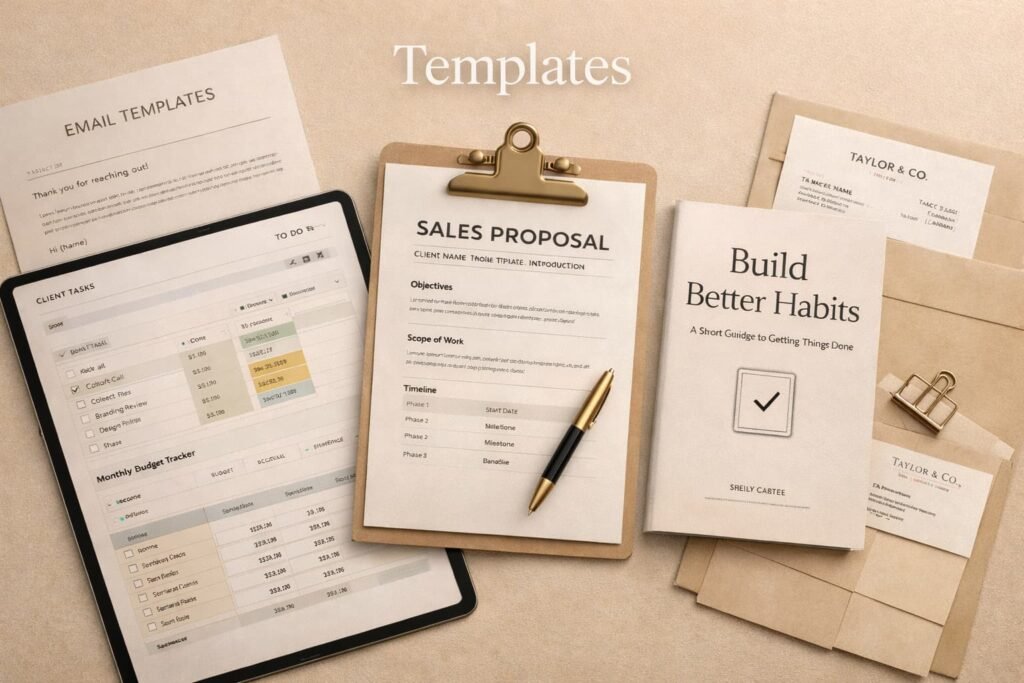
If I had to choose one category that makes the most sense for someone seeking a steady income, I would start here.
Templates are simple, useful, and easy to understand.
They also have one advantage many digital products do not: the buyer already knows what the value is. They are not trying to decode an abstract promise. They are buying structure, speed, and a head start.
That is why templates tend to work so well in practice.
A good template removes friction. It saves time. It helps someone avoid reinventing the wheel. And unlike a one-off service, the same file can solve the same type of problem for many different buyers.
That is the core of repeatable income.
The strongest template ideas are usually tied to a task people already repeat in their own lives or business. Planning, organizing, tracking, sending, presenting, onboarding, writing, reviewing, managing. These are not glamorous needs, but they are reliable ones.
That reliability is what makes the category strong.
The mistake people make here is building templates that look polished but do not actually remove work. A pretty layout is not enough. A buyer wants to open the file and feel immediate relief.
That is the real standard.
If your product makes someone say, “This saved me an hour,” or, “This gave me a better starting point,” you are much closer to something people will buy without a long explanation.
2) Printables and Planners
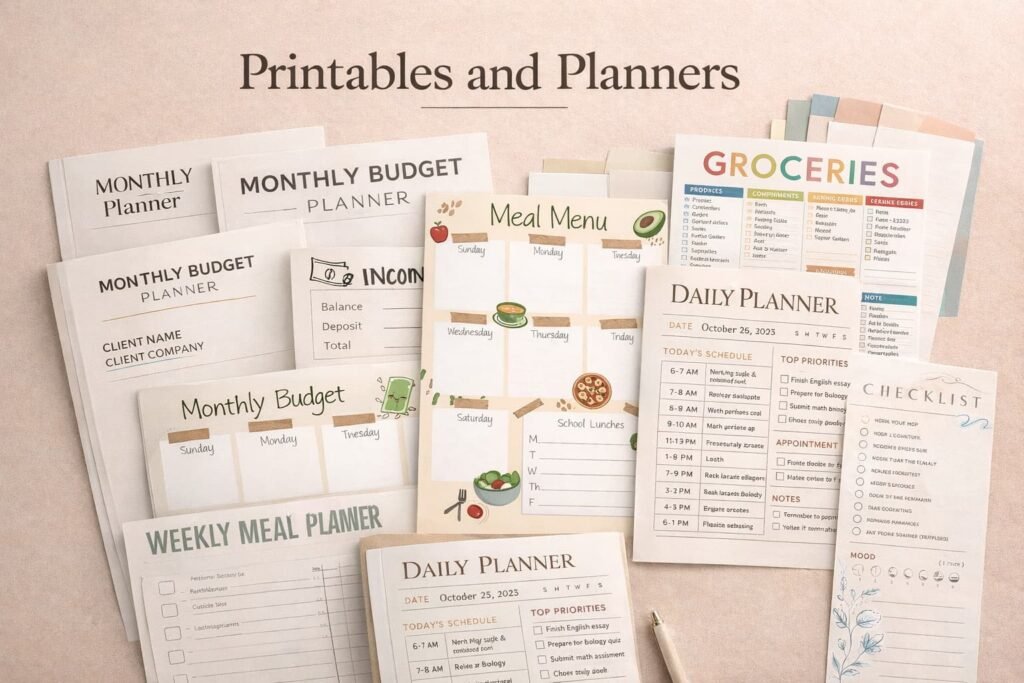
Printables, planners, trackers, checklists, worksheets—these can work very well when they are built around a narrow, recurring use case. In fact, for some audiences, they are easier to sell than more advanced products because the benefit is immediate and the learning curve is low.
People like products they can use right away.
That is why a clear budget tracker, study planner, content calendar, meal prep sheet, or business checklist still makes sense because it is practical.
This is one of the easiest categories to overgeneralize.
A broad “life planner” sounds nice, but it competes with everything. A specific “monthly budget planner for side hustlers” is easier to understand, easier to position, and easier for the right buyer to say yes to.
That is the pattern you start noticing across almost all successful digital products: specificity creates traction.
3) Resource Packs
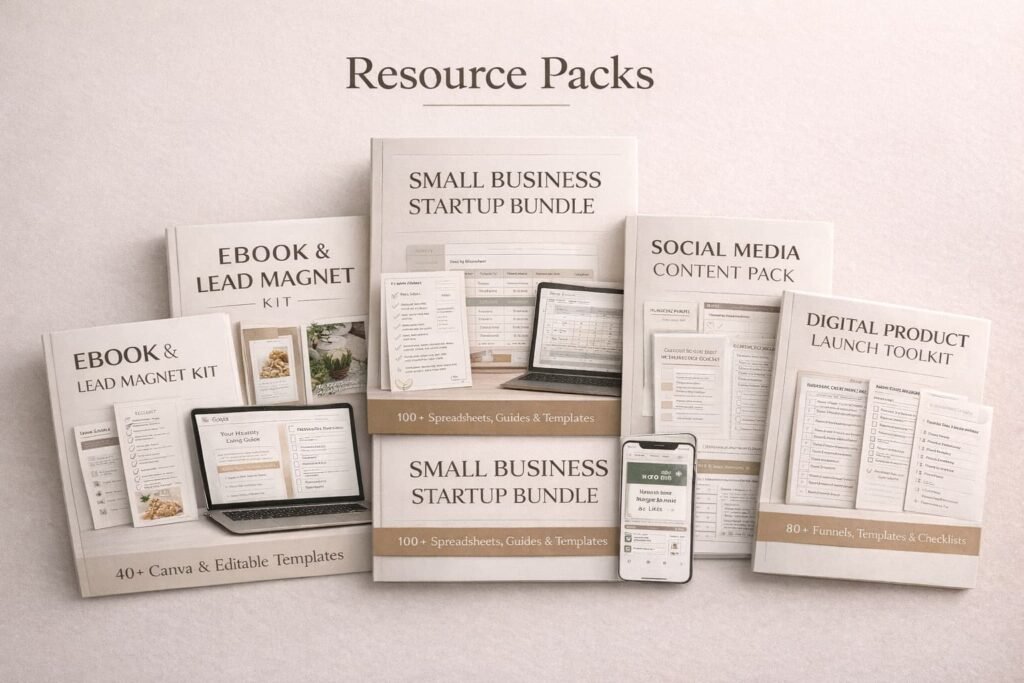
This is one of the categories people underestimate at first.
A single template can be useful. A well-built resource pack can feel like a complete solution.
That difference changes how people value it.
Instead of selling one file, you are selling a kit. A bundle that helps someone move through a process with less guesswork.
A strong resource pack usually works because it meets a person at a real stage of work. Starting a new service, onboarding a client, launching a product, creating content, organizing a workflow, preparing for a job search, and building a small business system. These are moments where people want support, but they do not always want full coaching or consulting.
A pack sits nicely in the middle.
It feels more substantial than a single download, but it is still easier to buy than a high-ticket offer.
This category can become very repetitive when the pack is tied to a process that many people go through. And it often performs better than isolated products because it feels more complete. Buyers are not left wondering what else they need.
That sense of completeness matters more than many sellers realize.
4) Mini-courses
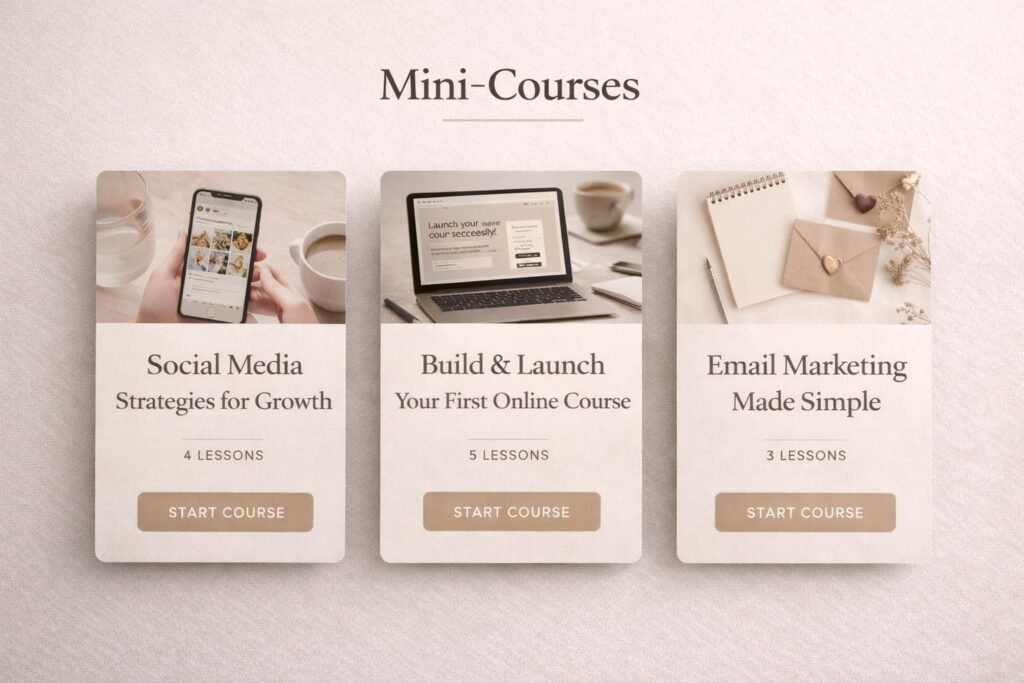
A massive course sounds like more value, but it often becomes harder to create, harder to finish, and harder to sell, especially if the buyer does not already trust you.
A mini-course is usually a smarter move.
It is tighter. Easy to understand, complete, and easy to position around one clear outcome.
That makes it more realistic as a repeatable product.
The strongest mini-courses are not trying to become someone’s whole education. They solve one practical problem, help the buyer make one visible improvement, and do not bury the lesson inside endless modules.
That is why focused teaching tends to outperform bloated teaching.
A short course that helps someone build a usable result often creates more trust than a large course that promises transformation but feels heavy before the buyer even starts.
So yes, courses can create repeatable income.
5) Swipe files and Copy packs
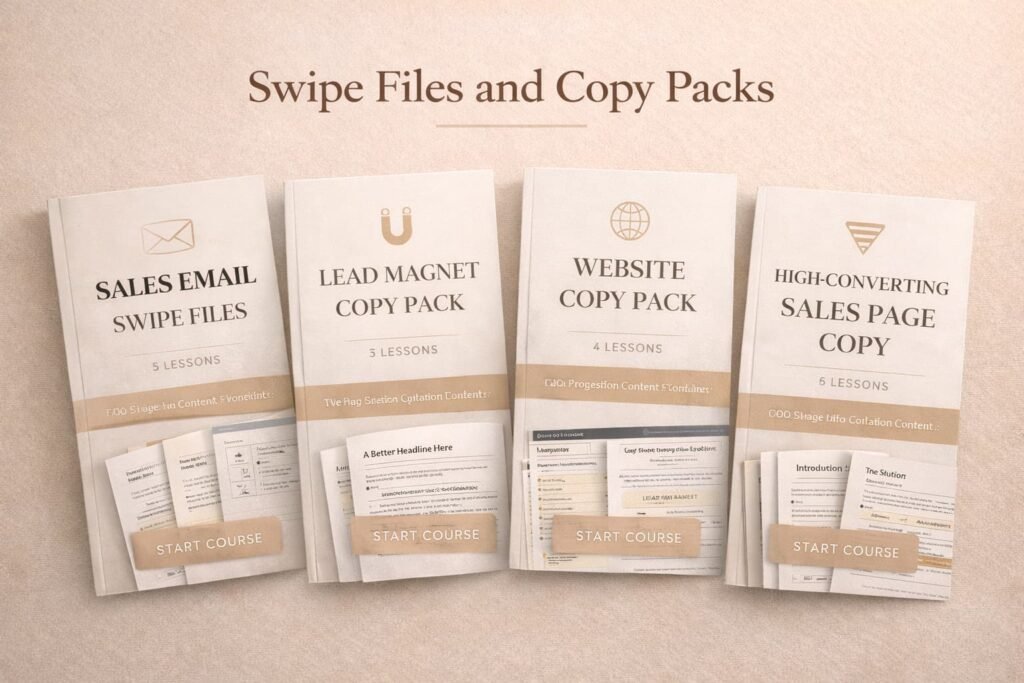
This category is easy to dismiss until you notice how often people are stuck on wording.
Emails. Captions. Outreach messages. Sales pages. DMs. Follow-ups. Proposals. Calls to action.
People spend more time than they admit trying to figure out what to say.
That is why good copy packs can sell.
Not because buyers want to copy mindlessly, but because they want a working starting point. A structure. A tone. And a practical example that helps them move faster.
What makes this category strong is that it saves mental energy. It removes blank-page friction. It also works across many niches because the deeper need is often the same: people want help turning ideas into usable language.
The risk here is making the product too generic.
If the copy feels like it could apply to anyone, it often lands with no one.
A sharp swipe file feels like someone already did part of the thinking for you.
That is what makes it valuable.
6) Digital Assets
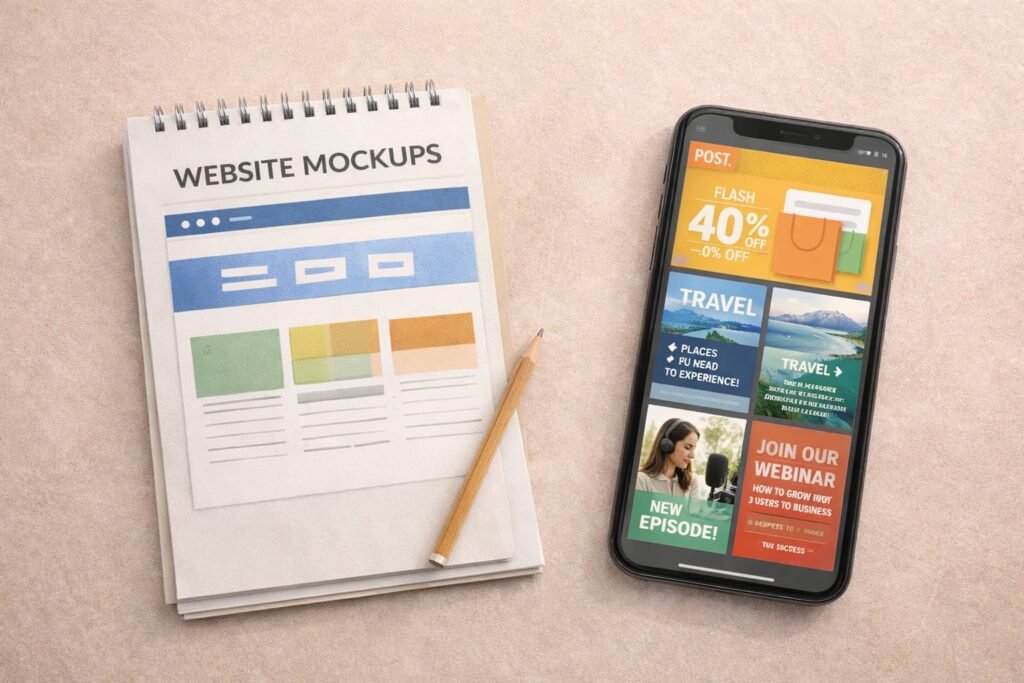
Design elements. Mockups. Icons. Presets. Photo packs. Brand assets. Presentation elements. Creative resources.
These can absolutely work.
But this category is more dependent on the buyer already understanding the use case.
A template can be sold to someone who simply wants an easier system. A design asset often needs a buyer who already knows how they will use it. That narrows the audience.
So while digital assets can create repeatable income, they usually work best when you are serving creators, marketers, designers, content teams, or business owners who actively work with visual tools.
If you choose this path, the key is not making the asset look impressive in a preview. The key is making the use case instantly obvious. The buyer should know what problem this asset helps them solve.
Without that, even beautiful products can feel vague.
7) Memberships
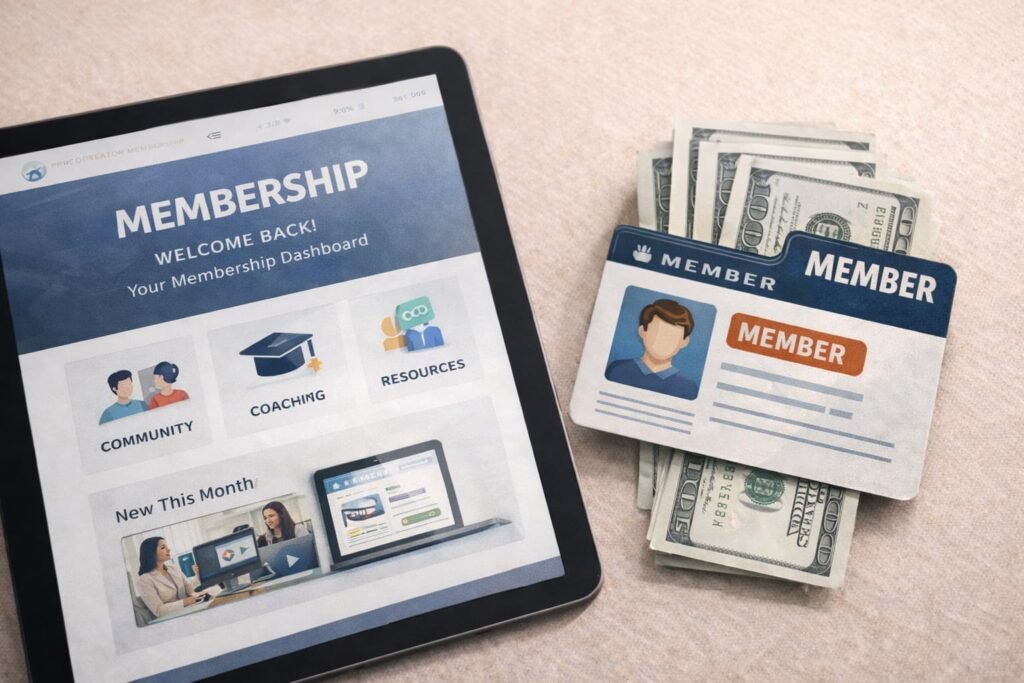
A membership is not just a product. It is an ongoing promise. That means people are not only paying for access today. They are paying because they believe the value will continue.
This is why memberships can become one of the best repeatable income models later, but often become exhausting when launched too early.
If you do not already know what your audience wants on an ongoing basis, a membership can quietly turn into pressure. You are now feeding a system that needs regular updates, fresh relevance, and a clear reason for people to stay.
When memberships work well, they usually sit on top of something else that already works—a useful library, a known content style, a trusted system, a recurring pain point, or a specific niche where updates genuinely matter.
So yes, this category can be strong. But if someone is just getting started, it is usually not the first product I would recommend.
Build trust and demand first. Then a membership starts making more sense.
╰┈➤ Also Read: Where to Sell Digital Products: Online Marketplace vs Online Storefront
The Best Digital Products to Sell Are Not Always The Most Exciting
This is where a lot of people get thrown off.
They assume the best digital products must be the most creative, the most original, or the most impressive-looking.
Usually, that is not what makes them work.
The best digital products to sell are often the ones that feel easiest to ignore at first glance because they are simple, narrow, and practical.
A buyer does not care that a product took you a long time to make. They care whether it makes their life easier, faster, clearer, or less frustrating.
That is what creates repeatability.
The more often your product can do that for the next person, the more stable the category becomes.
This is why the strongest digital products usually live close to real behavior: repeated tasks, friction, uncertainty, and repeated goals.
Final thoughts
If your goal is repeatable income, the strongest digital product is rarely the flashiest one.
It is the one that stays useful after the first sale. And it is something buyers can understand quickly, use easily, and recommend naturally because it genuinely helped.
So if you are deciding what to sell, do not start by asking what feels trendy. Start by asking what kind of problem keeps showing up, and what kind of product could solve that problem cleanly for more than one person.


