
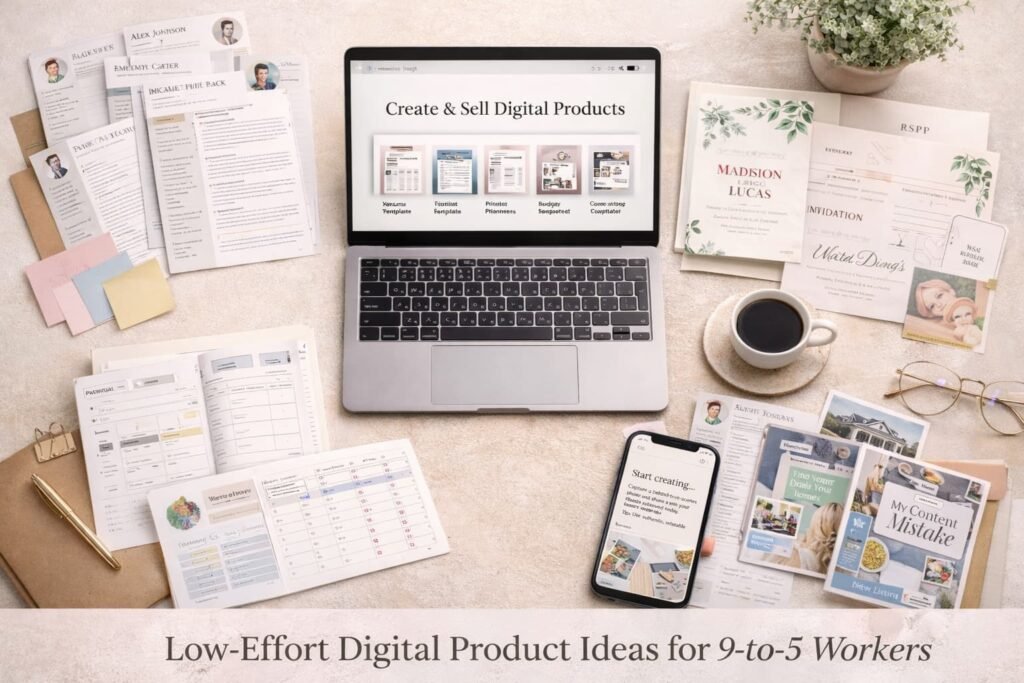

Most people who work full-time don’t lack ideas. They lack a clean way to execute them without turning life into a constant hustle.
That’s why digital products keep coming up in side hustle conversations. Not because they’re some magic shortcut, but because they’re one of the few models where you can do the work once, package it, and let it sell without endless back-and-forth.
Still, the digital product space can feel… noisy.
A lot of advice is written for creators with big audiences, people who enjoy designing for hours, or anyone trying to build a personal brand. If you’re just a regular working person trying to build something steady on the side, it’s easy to assume digital products are either too complicated or already saturated.
They’re not.
But you do need a realistic view of what works in the current market — especially in 2026, when AI has changed how fast people can create and publish.
So in this guide, I’m going to keep it practical: what digital products still sell, why people buy them, and how to start in a way that feels doable.
What the Digital Product Market Looks Like in 2026
Yes — the market is more competitive than it used to be.
If you search “planner” on Etsy, you’ll see thousands of results. Same thing with Canva templates and spreadsheets. That part is true, and there’s no point pretending it isn’t.
But here’s what’s also true: people are still buying digital products every day because convenience never goes out of style.
Most buyers aren’t hunting for “the most unique template in history.” They’re looking for something that feels:
- easy to use
- professional
- worth the price
- and what saves them time
What’s changed is that “pretty” isn’t enough anymore.
A few years ago, a nice-looking template could sell on appearance alone. Now buyers have been burned. They’ve downloaded products with messy formatting, confusing instructions, or bundles that sounded good but weren’t actually useful.
So the market has matured.
And honestly, that’s good news — because your advantage doesn’t have to be flashy design. Your advantage can be clarity, practicality, and trust. When your product feels thoughtful and usable, it stands out without needing gimmicks.
How AI Changes the Game (Easier… and Harder)
AI has made this space easier — and noisier at the same time.
On the “easier” side, AI removes a lot of the friction that stops people from shipping anything at all. If you’ve ever gotten stuck writing a product description, naming your files, creating instructions, or figuring out how to explain what’s inside your download, AI can speed that up.
That matters for 9-5 workers because the biggest enemy isn’t effort — it’s the mental resistance that shows up when you’re tired. Anything that reduces friction helps you actually publish.
But AI also created the downside: it made it easy for people to flood marketplaces with generic, copy-and-paste products. You’ve probably seen it already — endless similar planners, identical Canva kits, “ebook bundles” that feel like filler.
And because buyers have seen that too, they’ve gotten more cautious.
They don’t just buy the first listing anymore. They look for signs that the product is real, practical, and created by someone who actually understands the problem they’re trying to solve.
So the winning move in 2026 is simple:
Use AI to move faster — but don’t let it make your product feel generic.
AI can help you produce, but it can’t replace judgment, usefulness, and lived experience. That’s the part that makes a buyer trust you, buy from you, and come back.
The Low-Effort Digital Product Ideas
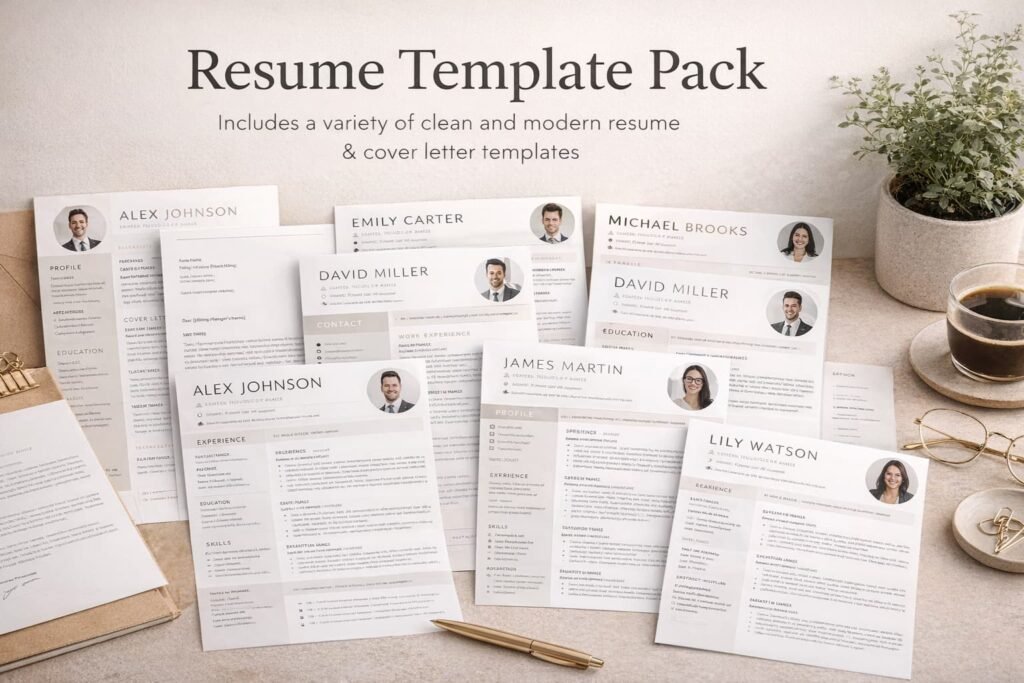
1) Resume + Cover Letter Template Packs
This is one of the cleanest digital products to start with because the demand never goes away.
People don’t buy resume templates because they’re excited about formatting. They buy because job searching makes people second-guess themselves. They want something that looks professional, reads clean, and doesn’t make them feel like they’re messing it up.
A good resume pack doesn’t need to be fancy. It needs to be usable.
What makes it work is:
clean layout, easy editing, and a structure that guides the person instead of confusing them.
Where most sellers miss it is they try to appeal to everyone.
The easy way to stand out is to create versions that feel made for a specific person:
students, career changers, corporate workers, customer service and retail roles — those are different lives, and they need slightly different layouts and phrasing.
That specificity makes the product feel trustworthy. Like it was built by someone who understands the real situation, not someone dumping generic templates online.
2) Printable Planner Bundles
Planners still sell. What doesn’t sell as easily anymore is “another pretty planner.”
The planners people actually use — and repurchase — are the ones that fit real life.
A busy person isn’t looking for aesthetic planning. They’re looking for something that helps them stay on track without turning planning into a hobby.
That’s why simple, functional planner bundles still work.
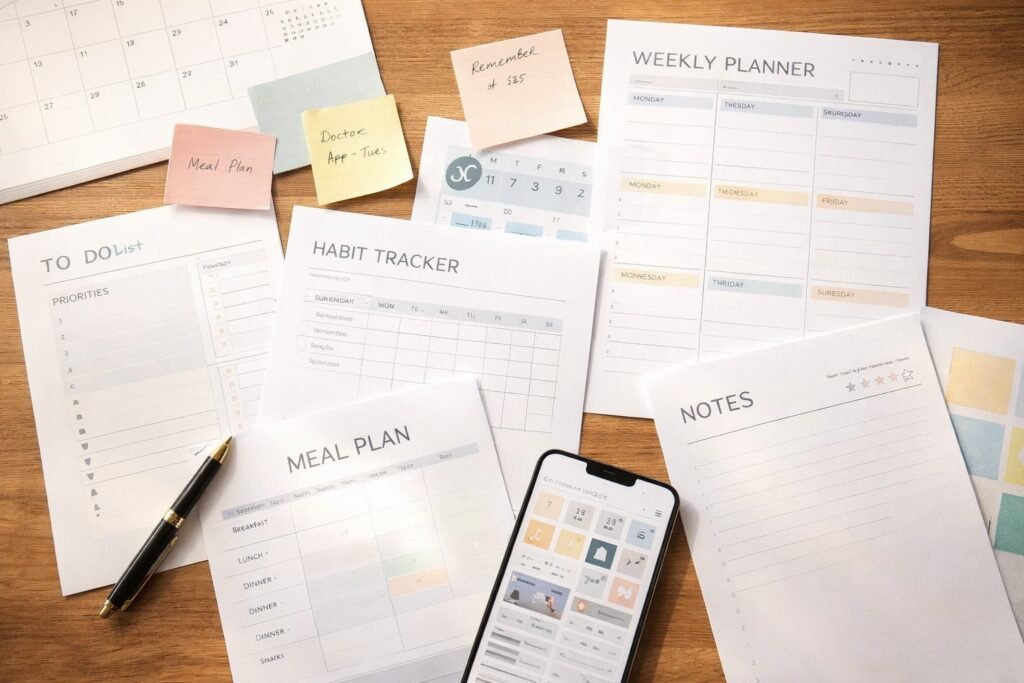
You don’t need a massive planner. Ten to fifteen strong pages is enough if the pages actually do their job — weekly planning, monthly overview, habit tracker, meal plan, to-do lists, notes.
The key is making it feel like it was built for a real schedule.
A minimalist planner for busy professionals isn’t the same as a student planner. A weekly parent planner isn’t the same as a “get back on track” planner.
Same product category, different buyer. And when the buyer feels understood, sales follow.
3) Budget Spreadsheets
This is one of those product types that doesn’t look exciting — but it’s quietly one of the most useful.
People buy budget spreadsheets for one reason: they want clarity, and they don’t want to build formulas.
Most buyers aren’t trying to become financial experts. They just want to see where the money is going and feel like they’re back in control.
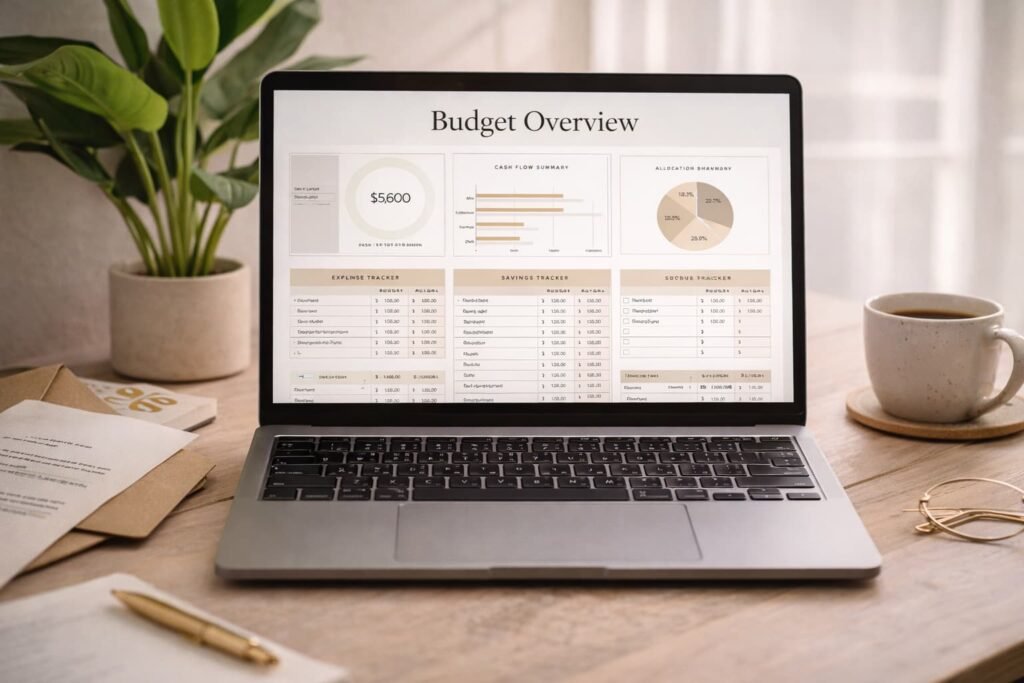
A strong budget spreadsheet doesn’t need complexity. It needs simplicity:
income, expenses, totals, and a clear summary.
What separates a “good” spreadsheet from a “why is this confusing?” spreadsheet is the small stuff: clear labels, logical categories, and basic instructions that make people feel confident using it.
In this market, a simple spreadsheet that someone can set up quickly will beat an advanced spreadsheet that makes them feel overwhelmed.
╰┈➤ Also Read: Where to Sell Digital Products: Online Marketplace vs Online Storefront
4) Canva Social Media Template Kits
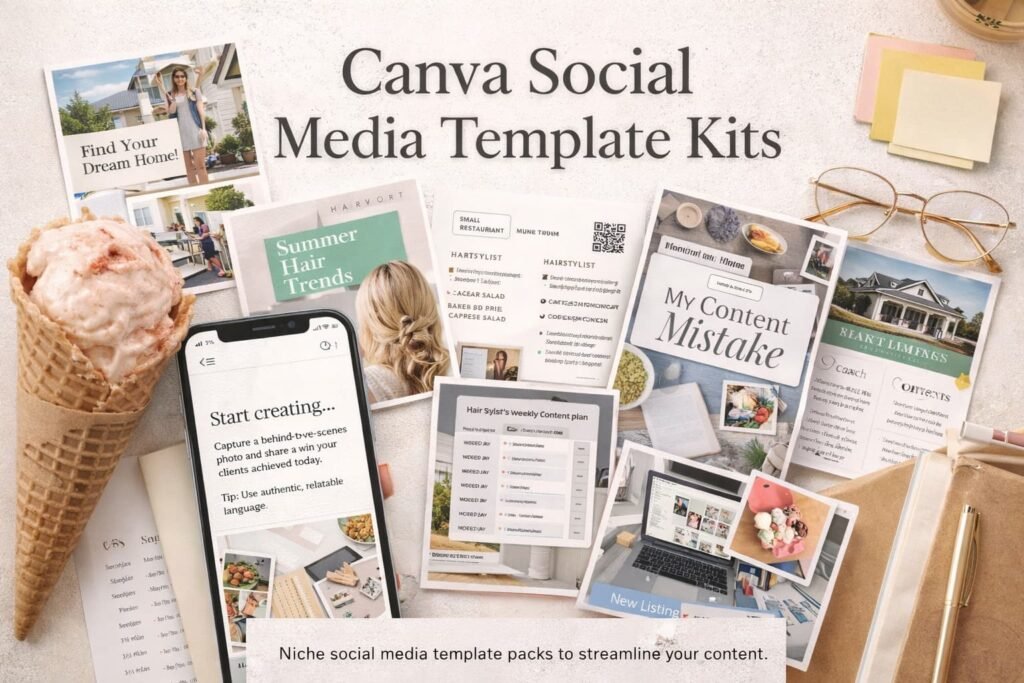
This space is crowded, but it still works because businesses will always need content — and most people don’t want to design from scratch every time.
The mistake people make is selling “Instagram templates” like it’s one product for one audience.
It isn’t.
The packs that sell are the packs that feel made for a specific type of business:
realtors, hair stylists, restaurants, coaches, small service businesses.
People buy these kits because they’re tired. They want consistency without thinking. They want to open Canva, swap text and photos, and be done.
If you want your templates to feel more valuable than “pretty designs,” include something that helps them actually use the kit: a set of content prompts, caption starters, or a simple posting rhythm.
That turns the product into a tool, not just a design pack.
5) Event Invitation Suites
This category works because events come with a clock.
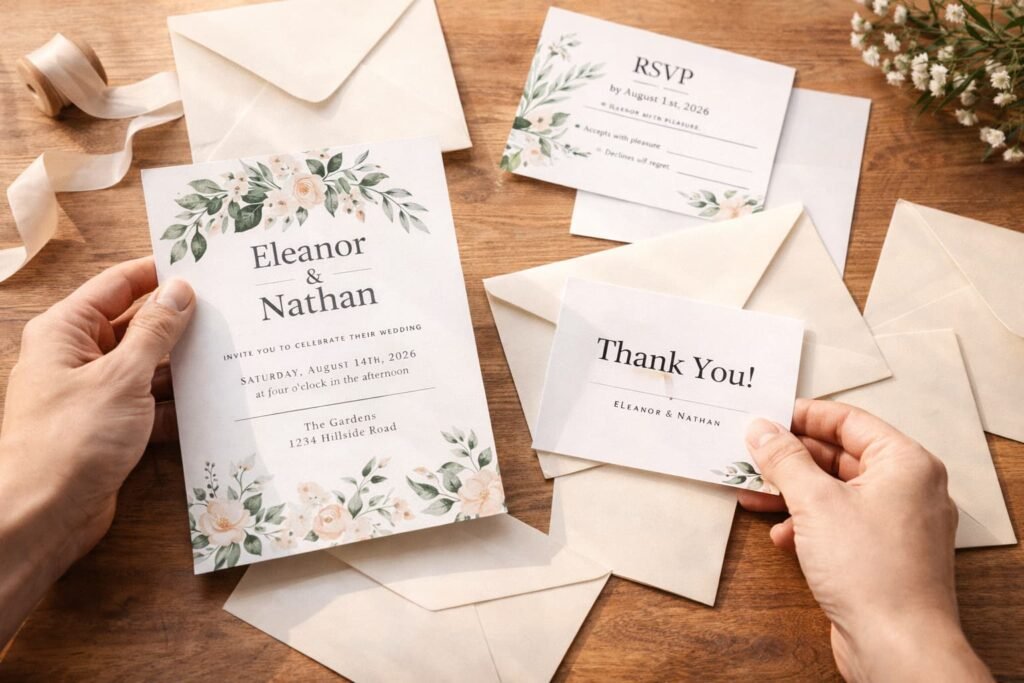
When someone is planning a wedding, baby shower, birthday, or anniversary, they don’t want to spend days designing invitations. They want something clean, editable, and done.
That urgency is why invitation suites sell.
A simple suite usually includes: invitation, RSVP card, thank-you card, and a welcome sign. That’s enough to feel complete without making the product harder to create.
And the reason this category performs isn’t only because it’s creative — it’s because it removes stress at a moment when people are already overwhelmed.
╰┈➤ Also Read: 25 Best Side Hustle Ideas for a 9-5 Worker
So… Will People Really Buy These Digital Products in 2026?
Yes — People buy these because they make life easier. They save time. They reduce stress. And they give someone a clean starting point when they don’t want to build from scratch.
The market is definitely more competitive now, but it’s still very alive. What’s changed is that buyers have gotten smarter — especially with AI making it easy for anyone to upload something quickly.
So “good enough” doesn’t win the way it used to.
What buyers look for now is simple: clarity, usefulness, and trust.
They want to feel like:
- “I understand what I’m buying,”
- “I’ll actually be able to use this,” and
- “This was made by someone who put thought into it.”
That’s why your voice matters. When you explain things clearly and honestly, it doesn’t just help the reader — it also makes your product feel more reliable.
A Simple Way to Start (Without Overthinking)
If you’re working a 9-to-5, the goal isn’t to build the perfect product. The goal is to get one small, real product out into the world and learn from it.
Here’s the simplest approach that works:
Pick one product type. Create a small “Version 1” bundle. Add a one-page guide so buyers don’t feel lost. Publish it. Then improve it based on feedback.
That’s it.
Your first product doesn’t need to be impressive. It needs to be usable. It needs to feel clear. And it needs to help someone solve a real problem without confusion.
Everything else can come later.
Final Thoughts
Low-effort digital products can be a smart side project for 9-5 workers — not because they’re effortless, but because they’re one of the few side hustles where your time isn’t permanently tied to your income.
You can build gradually. You can publish imperfectly. And you can improve over time.
In 2026, AI has made creation faster and competition louder. But that doesn’t mean buyers stopped buying. It means buyers are more careful. They’re more selective. And they’re quicker to ignore anything that feels rushed or generic.
The products that win now aren’t the biggest, prettiest, or most complicated.
They’re the ones that are simple, specific, and genuinely helpful.
And if you can deliver that — even with one small product — you’re already ahead of most people who never publish at all.




Thanks for the ideas
Hi, Benny.
I’m happy the article is helpful
Thanks for the tips
You’re welcome, Xender. Do check out other articles for more tips to succeed in your side hustle.
I like the “Event Invitation“ idea. I think I would look further into it.
Thanks.