
Let’s be real, the first time you hear “get paid to share your unused internet bandwidth for money,” it sounds like one of those ideas that lives in the same part of the internet as “make $5,000 a week from your couch.”
Suspicious. A little too convenient. And honestly… confusing.
But the concept itself is simple. It’s not magic, and it’s not new. It’s closer to a “background earner” than a side hustle — the kind of thing you set up once, keep an eye on occasionally, and let it quietly do its thing while you live your normal life.
The problem is that people approach it with the wrong expectations. They expect “real side hustle money.” Then they’re disappointed when the earnings are small. Or they install five apps at once, don’t set any limits, and end up frustrated when something feels off.
This article is the calm, honest version: what bandwidth-sharing actually is, who it makes sense for, what to watch out for, and the best legit apps/websites worth trying.
What Does It Mean To Share Unused Internet Bandwidth For Money
Your internet connection has capacity. Most of the time, you’re not using all of it.
Bandwidth-sharing apps basically let you “rent out” a tiny portion of that unused capacity through their network. Companies use those networks for things like web data access, localization checks, and other internet-based tasks that benefit from having distributed residential connections.
So the app runs in the background, uses a small amount of your unused bandwidth, and pays you a small amount in return.
That’s it.
You’re letting an app use a little bit of what you’re not using, and you get compensated.
And the keyword there is little, because that’s where most people get the wrong idea.
The Reality Check Most Articles Don’t Give You
This can be worth it — but only if you understand these truths upfront.
••• First, earnings are usually small and inconsistent. Demand changes. Some countries and internet regions get more usage than others. Some days you’ll earn more; on other days, it’ll barely move.
••• Second, it works best on unlimited home internet. If your plan has a data cap, or if you’re paying per GB, you need to be careful. The last thing you want is earning $6 and getting hit with a data overage.
••• Third, the “set it and forget it” part is real — but only after you set it up properly. People run into problems when they don’t control the basics: Wi-Fi only, bandwidth limits, device uptime, and choosing platforms that are actually reputable.
The best way to think about this space is like this:
If you’re expecting “rent money,” you’ll be disappointed.
If you’re okay with “quiet money that adds up,” it can be worth it.
Share Unused Internet Bandwidth for Money: Who This Works For (And Who Should Skip It)
This is where you save yourself time.
If you’re a good fit for bandwidth sharing, it tends to feel easy. But if you’re not, it becomes annoying fast.
It usually makes sense if you have a stable home internet connection, an unlimited data plan, and at least one device (phone, laptop, or desktop) that stays on for long stretches. And it also helps if your internet speed is decent and your connection doesn’t drop constantly.
It usually doesn’t make sense if you rely on mobile data, you have strict data caps, you’re using public or shared networks, or you’re hoping this replaces a real income stream.
This is not a hustle you “grind.”
It’s more like a small background lever you pull and leave running.
╰┈➤ Also Read: 20 Best Flexible Income Websites for 9-5 Workers
The Best Legit Bandwidth-Sharing Apps and Websites (Worth Testing)
There are more apps in this space than most people realize — and that’s where beginners get stuck. So instead of dumping a giant list, I’ve listed reputable, well-known platforms worth trying.
Honeygain
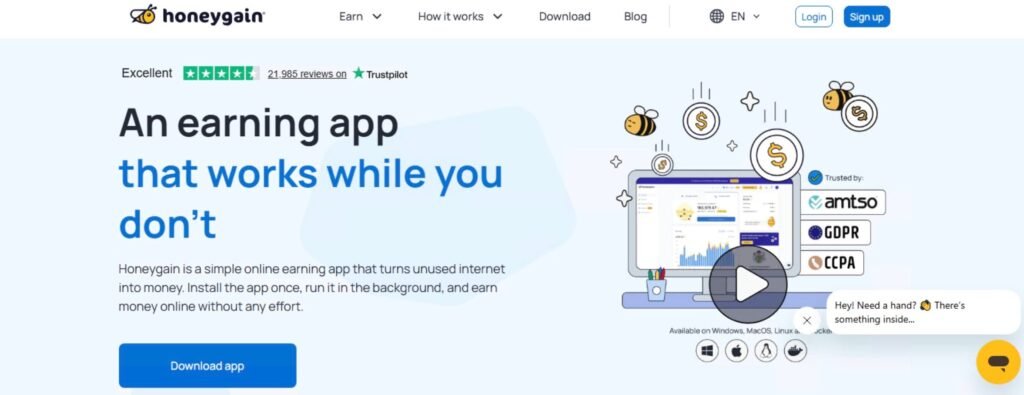
Honeygain is one of the most established names here, and it’s simple. Install it, run it in the background, and cash out once you hit the threshold. It’s popular because it’s straightforward and doesn’t require constant interaction. The downside is that it can feel slow depending on where you live — and the payout threshold can take time to reach if demand is low in your area.
This is a good starting option if you want something stable and easy to understand.
EarnApp
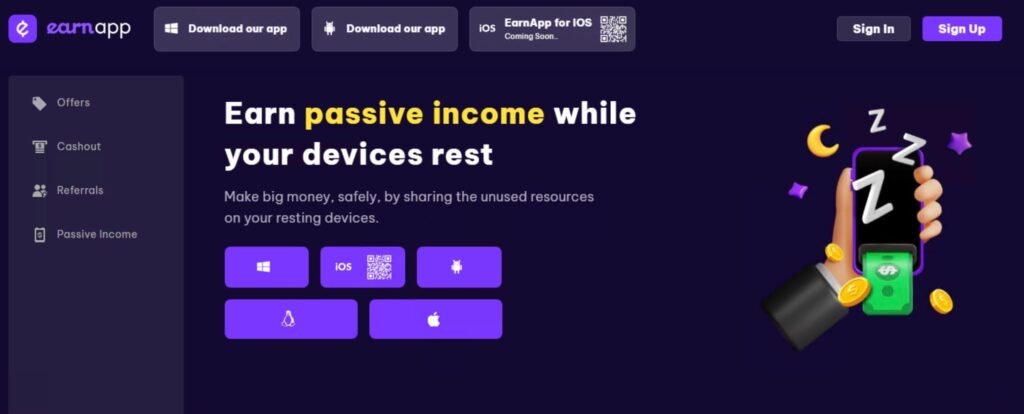
EarnApp is another solid option in the “install it and let it run” category. It’s widely used and tends to work quietly in the background. One thing to understand is that payout structures can change over time, so you shouldn’t obsess over the exact math. The best way to treat EarnApp is as a platform you test for a week and judge based on your real results — not screenshots online.
Good for people who want a calm, hands-off setup.
Pawns.app
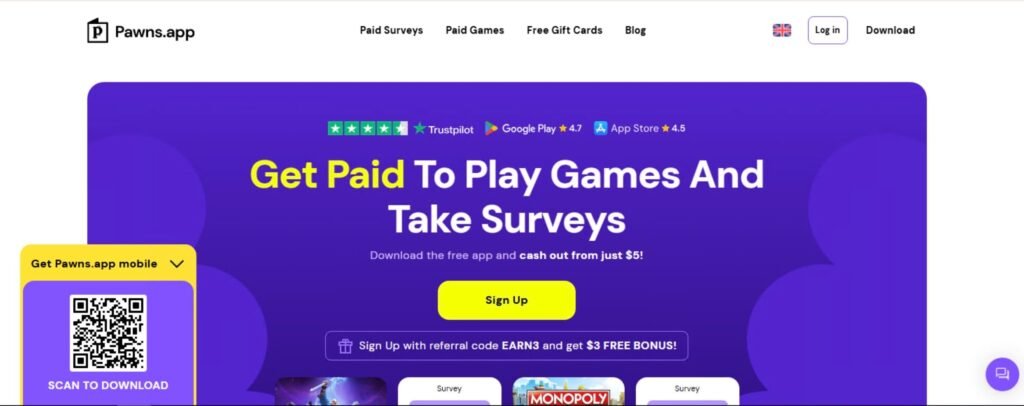
Pawns.app is popular partly because it doesn’t feel like you’re waiting forever to see progress. It’s also common for people to use it as a “stacking” option alongside another app, because it gives you more than one way to earn (bandwidth sharing plus optional extras like surveys).
The honest warning: don’t let the extra earners distract you from the main purpose. If you’re reading this article, your goal is bandwidth income — so treat everything else as optional.
PacketStream
PacketStream is one of the clearer “pay per GB” style platforms. The model is simple: you share bandwidth and get paid based on usage. Like everything in this space, your results still depend on demand and location — but if you like transparent mechanics, this one is worth testing.
This is a good pick for people who want a clean, no-frills setup.
Repocket
Repocket is in the same family of bandwidth-sharing tools and can be worth testing as a secondary option. The main thing I’d say is: don’t treat it like guaranteed income. Treat it like a “run it for a week and see” platform. If your earnings are decent and your connection stays smooth, keep it. If it’s slow or annoying, drop it.
EarnFM
EarnFM is another platform in this space that many people try as a background earner. It can be useful as part of a “one or two app” stack. Same rule: measure your own results, don’t rely on online claims.
TraffMonetizer
TraffMonetizer is often mentioned in bandwidth-sharing communities and has a presence on app stores. But user experiences can be mixed. If you include this, treat it as optional and test it carefully — don’t install it and disappear for three months.
The Smart Setup (So You Don’t Ruin It for Yourself)
Here’s the simplest, safest way to start — and this is where most people go wrong.
● Start with one app. Not five.
● Run it on one device. Not all your devices.
● Let it run on Wi-Fi only. Not mobile data.
● Give it a week.
That one-week test will tell you almost everything: whether it earns anything meaningful in your location, whether it affects your internet performance, and whether it feels worth keeping.
If the first app runs smoothly and your earnings look okay, then add a second one. That’s how people stack these without turning it into a mess.
And don’t forget the “boring” settings that matter: if the app offers bandwidth limits, use them. If it offers scheduling, set it to run during times you’re not actively working or streaming. If it gives you device control, keep it simple and consistent.
The goal is background income — not turning your internet into a science project.
Safety Basics (Without the Fear-Mongering)
You don’t need to be paranoid, but you do need common sense.
Use reputable, well-known platforms with real support pages and clear explanations of how they work. Avoid anything that looks like it was thrown together yesterday with vague promises and no transparency.
Don’t run these apps on your work internet, school internet, or public Wi-Fi. Stick to your own personal home network where you’re in control.
And if anything ever feels off — performance issues, weird device behavior, strange permissions — pause it. You’re not locked in. The whole point is that you can stop anytime.
╰┈➤ Also Read: 25 Best Side Hustle Ideas for a 9-5 Worker
What Success Actually Looks Like Here
Let’s define success properly, because this is where the internet lies to people.
Success in bandwidth sharing is not “quit your job money.”
It’s “small money that shows up without asking for your time.”
If one or two apps quietly cover a subscription, contribute to a bill, or give you a little monthly cushion — without annoying you — then it’s doing its job.
That’s the win.
Final Thoughts
To share unused internet bandwidth for money is real, but it’s oversold in the same way a lot of “passive income” ideas are oversold.
The payouts are usually small. Demand is inconsistent. And it will never replace a proper income stream.
But as a background earner? It can make sense.
The best approach is simple: choose one reputable app, set it to Wi-Fi only, let it run for a week, and judge it based on your real results. If it’s smooth and the money is decent in your area, add a second. If it’s slow, annoying, or not worth it, drop it without guilt.
That’s the right mindset for this space.
Not hype. Not hope. Just a quiet, practical test — and a decision based on reality.